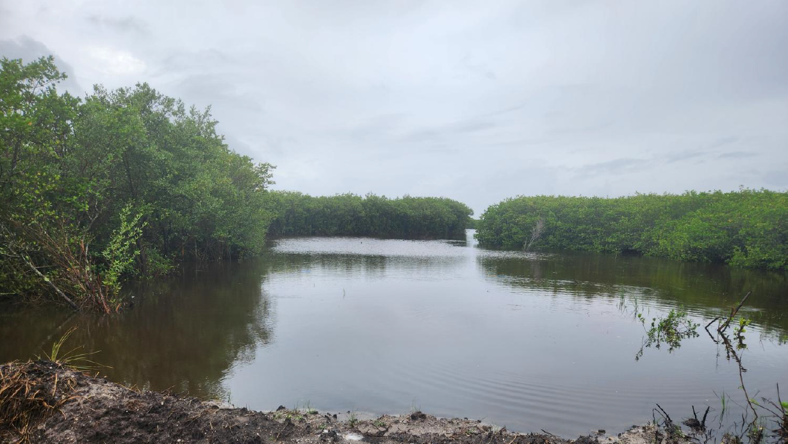
The District (District) is advancing a new, collaborative approach to help coastal communities restore and protect vital wetlands. Through interagency agreements with coastal local governments, the District aims to streamline the launch of restoration projects, reduce costs and deliver environmental benefits more efficiently.
“This agreement represents an important step forward in restoring and protecting our coastal wetlands,” said District Executive Director Mike Register. “By partnering with local governments like Indian River County, we can work more efficiently, reduce costs and accelerate meaningful restoration that improves water quality, strengthens coastal resilience and supports vibrant natural ecosystems.”
The first of these umbrella agreements, developed in partnership with Indian River County, establishes shared restoration goals and a clear framework for initiating individual projects. The Indian River County Board of County Commissioners approved the agreement on Nov. 18, 2025, and the District’s Governing Board approved it during their meeting on Jan. 13.
“Indian River County is proud to partner with the District on this innovative, collaborative approach to coastal restoration,” said Indian River County Administrator John Titkanich, Jr. “These projects will help restore the natural function of our wetlands, enhance habitat for wildlife and provide long-term benefits for our residents and coastal environment.
The work planned under these agreements will directly support healthier wetlands, which are critical natural resources that filter water, buffer communities from storms and support fish and wildlife. Potential restoration activities may include removing dragline ditches, dikes, levees or outdated water control structures; constructing or maintaining water control structures within impounded wetlands; and placing materials that stabilize shorelines or establish living shorelines.
Some of these restoration projects will be far more cost-effective than past efforts, thanks in part to improvements in GPS-guided equipment. This technology helps crews shape the land with greater accuracy. When wetlands are rebuilt to the right elevation, they can typically return to their natural ecological functions without ongoing operation or maintenance. This saves time and money while achieving long-term environmental benefits.
Learn more about the benefits of coastal wetlands and the District’s restoration work at www.sjrwmd.com/education/wetlands/coastal-wetlands-restoration.