

Rainfall helps, but water resource recovery remains ongoing across portions of the District
at
Florida’s rainy season is a critical time for replenishing water supplies, but rainfall over the past year has not been sufficient to fully erase accumulated deficits across portions of the District. While recent storms have produced localized improvements, many areas remain well below normal rainfall totals and require additional widespread rainfall to return to typical conditions.
Water resources often recover more slowly than rainfall totals alone might suggest. Groundwater systems, lakes and rivers can take weeks or months to respond, particularly after extended dry periods. Continued conservation helps reduce demands on water supplies while those resources recover.
“Recent rainfall has certainly been beneficial, and we’re beginning to see small improvements in some locations,” said District Director of the Division of Water Supply Planning and Assessment Clay Coarsey. “However, recovery is not immediate. Many parts of the District are still experiencing significant rainfall deficits, especially in the central portion of the state where most of the recharge to the aquifer system occurs. Conserving water remains one of the most effective ways residents can help protect our water resources while conditions continue to improve.”
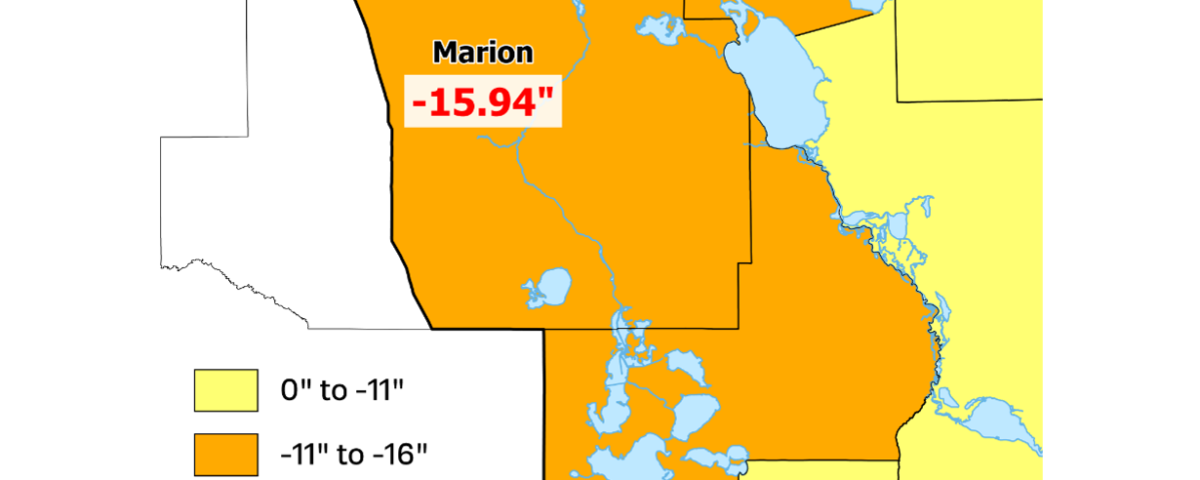
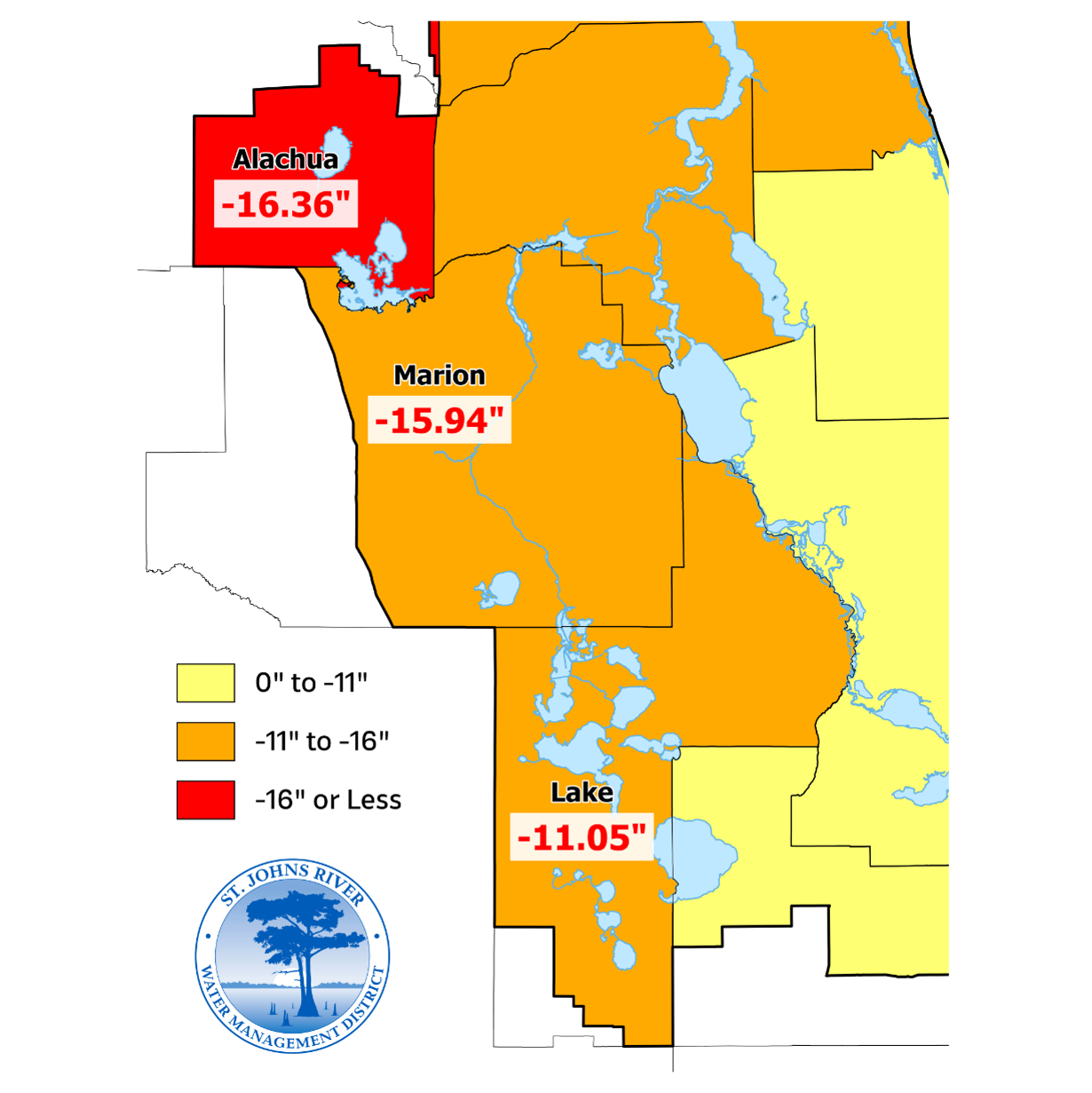
As of this week, portions of the Ocklawaha River Basin continue to experience some of the largest rainfall deficits within the District. Deficits vary by location, with some areas remaining more than 15 inches below average over the previous 12 months.
The District’s Phase III Extreme Water Shortage declaration remains in effect within the affected areas as staff continue monitoring rainfall, groundwater levels, spring flows and other drought indicators. Restrictions were implemented in response to prolonged dry conditions, declining groundwater levels and reduced surface water flows.
Mandatory restrictions remain in place, including:
Outdoor irrigation continues to be one of the largest uses of potable water. Residents are encouraged to check that irrigation timers are set correctly to ensure that irrigation occurs only on their designated watering day and only during allowable hours. Irrigation systems should also be checked for leaks, and sprinklers should only water landscaped areas, not streets, sidewalks or driveways. An average home uses almost 1,000 gallons of water per irrigation cycle.
District staff will continue evaluating hydrologic conditions and determining when water shortage restrictions can be modified or removed. Until then, conservation remains a key tool for supporting water resource recovery throughout the region.
To view the complete water shortage order, including detailed requirements for each water use category and water conservation tips, visit sjrwmd.com/wateringrestrictions.
Residents may occasionally see irrigation systems operating in public spaces such as parks, medians and common areas during the water shortage. In many cases, these systems use reclaimed water, which is a highly treated recycled water source that helps reduce demand on potable groundwater supplies. While conservation remains important across all water sources, some reclaimed water systems must continue operating to maintain system function or manage storage capacity.
To learn more about reclaimed water and its beneficial uses, visit https://floridadep.gov/water/domestic-wastewater/content/floridas-reuse-program.
To view current rainfall deficit information across the District, including county-specific data and downloadable high-resolution graphics, visit the District’s Media Library at www.sjrwmd.com/newsroom/media-library.