August is National Water Quality Month!

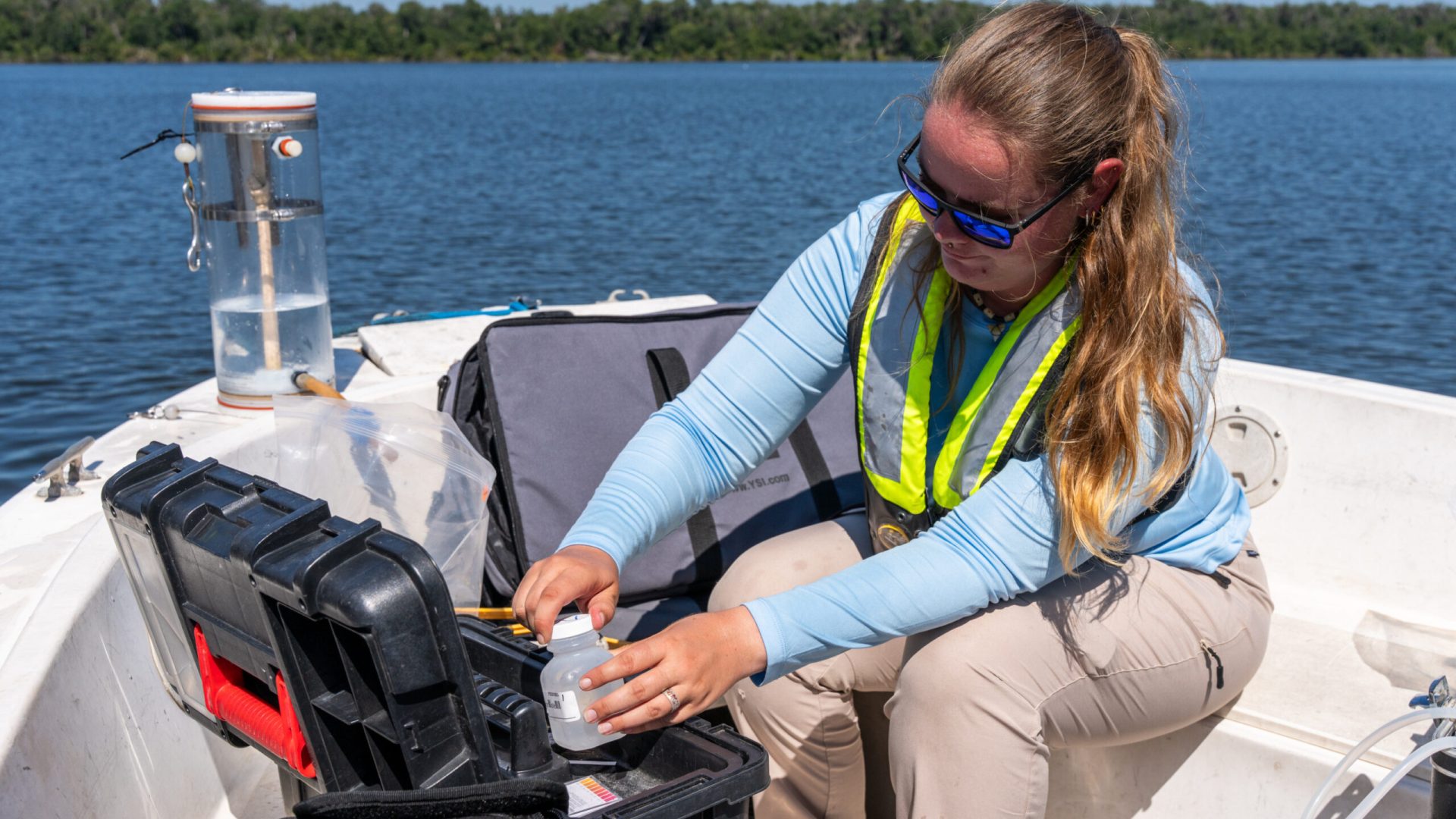
Water management district field staff collects a water sample from a boat using monitoring equipment on a lake.
The District’s water quality monitoring efforts provide insight into what’s happening with our water. Data from monitoring efforts is used by District staff and partners.
Did you know that in an average year, the St. Johns River Water Management District (District) collects and analyzes approximately 6,500 water samples at their in-house lab? This analysis provides over 276,000 data points that are used by District scientists and partners to inform management actions.

Clean water is a critical need for all residents of Florida, and the District is committed to monitoring, protecting and restoring water quality throughout the 18-county service area.

What the District does:

Water quality analyses help District scientists and partners identify challenges and guide solutions.  Diversion projects like the Crane Creek/M-1 Flow Restoration Project, land acquisition and management and the District’s regulatory program all support the goal of improving Florida’s water quality.

What you can do:

Water connects us all. By making simple changes at home, you can help protect water quality in your community.

  • Keep grass clippings and leaves out of storm drains and off roadways. Grass clippings and leaves decay into nitrogen and phosphorus, both nutrients that trigger harmful algal blooms. Rake or blow grass clippings and leaves back into your yard or collect and dispose as green waste.
  • Use the right fertilizer at the right time. To avoid heavy rain from washing fertilizer into Florida’s waterways, many counties have fertilizer ordinances regarding seasonal application and types of fertilizer that can be used. The University of Florida’s IFAS program has an app where you can check local ordinances.  
  • Wash your car at the car wash rather than in your driveway. Soapy runoff from driveways flows into storm drains and eventually into local waterways, where it can destroy the mucus layer that protects fish from bacteria and parasites. Often, commercial car wash facilities in Florida have closed-loop systems, collecting, filtering and reusing their water, conserving water and keeping soaps and debris out of waterways altogehter.  
  • Pick up after your pets and dispose of pet waste in household trash. Pet waste contains harmful pathogens and bacteria that can make people and animals sick.
  • Painting? Clean your brushes in buckets, not the hose. Let the material settle out before disposing of it in your household drain where the municipal waste system can filter out sediments. Contact your local waste management to dispose of unwanted paints and other chemicals.

Learn more about the District’s water quality monitoring program and projects to improve water quality on our website.