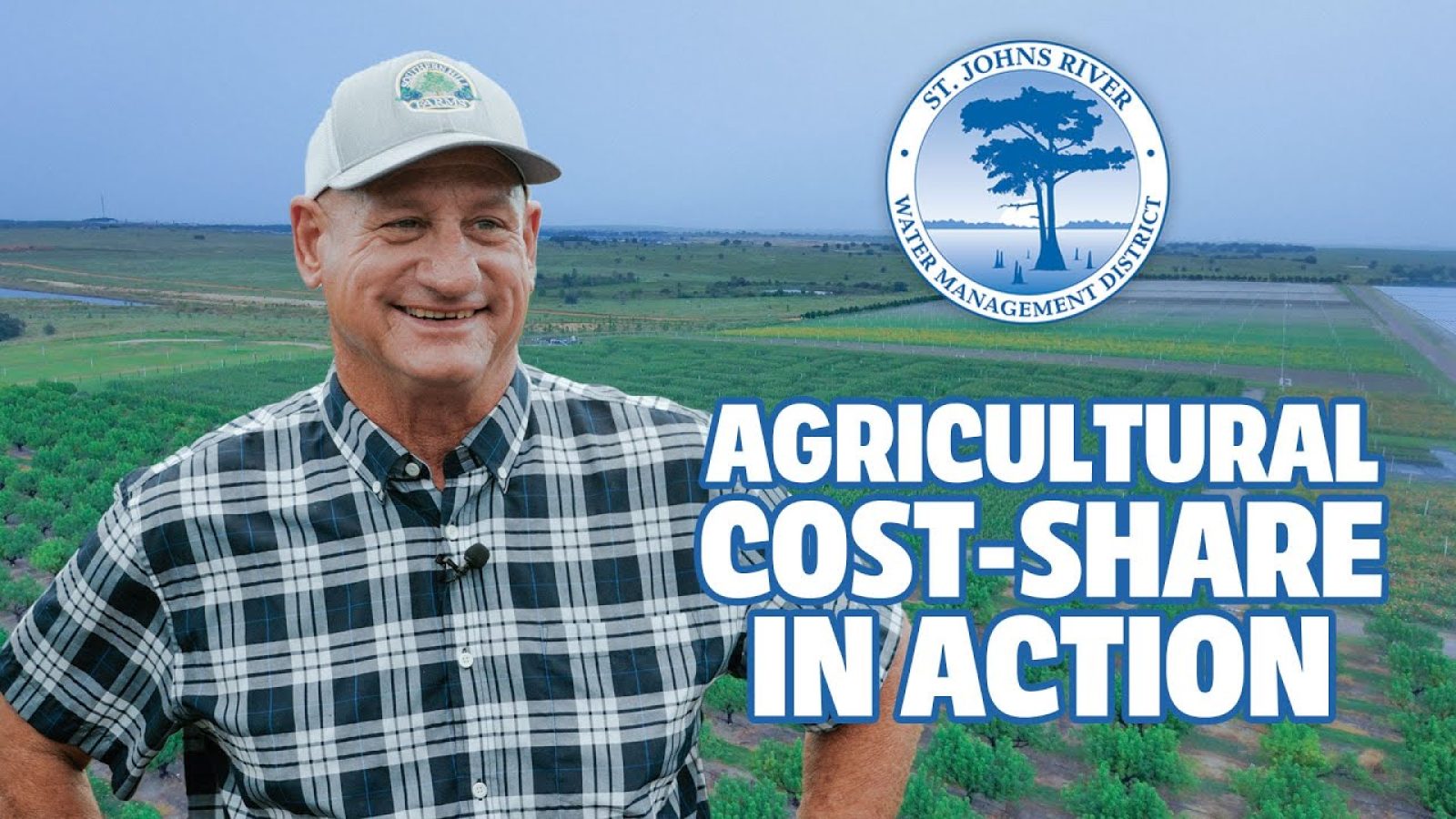
For David Hill, owner of the family-operated farm, caring for the land is an important part of running a successful agricultural business. Through the St. Johns River Water Management District’s Agricultural Cost-Share Program, Southern Hill Farms has been able to implement advanced irrigation and nutrient management technologies that improve efficiency while supporting the farm’s long-term sustainability.
“There was a need, and you’re always scratching your head trying to figure out when the right time is to do it and whether you can afford it,” Hill said. “With the cost-share program, it makes sense. It was a no-brainer. You still have to make an investment, but not nearly as much. It made business sense, so you can apply your morals and ethics and still have it make sense financially.”
Located on 120 acres in Lake County, Southern Hill Farms has grown from its first blueberry crop in 2010 into a beloved agritourism destination. Today, the farm includes approximately 40 acres of blueberries, five acres of peaches and 15 acres of strawberries, along with seasonal vegetables, sunflowers and zinnias.
Maintaining productive crops requires careful management of water and nutrients. The District’s Agricultural Cost-Share Program helps producers implement conservation improvements by sharing the cost of eligible projects, making it easier to invest in technologies that may otherwise be difficult to afford. The program supports projects that improve irrigation efficiency and nutrient management, helping farmers reduce water use and fertilizer applications while maintaining productive operations.
“Agriculture is a huge part of Florida’s culture, economy and tourism industry,” said Taylor Maxwell, an agricultural partnership representative for the District. “Having a local food source is important for our communities, but agriculture also uses significant amounts of water and fertilizer. The cost-share program helps producers invest in equipment and technology that reduces water use and fertilizer applications while maintaining productive farming operations.”
At Southern Hill Farms, the investments are delivering measurable conservation benefits. Improvements implemented through the District’s cost-share program conserve more than 15 million gallons of water annually while preventing more than 2,000 pounds of nitrogen and 360 pounds of phosphorus from entering local waterways each year.
Those savings matter well beyond the farm. Using water more efficiently helps protect Florida’s water resources, while reducing nutrient runoff helps support the health of lakes, rivers, springs and wetlands. As Florida’s agricultural industry continues to balance food production with growing demands on water resources, partnerships between farmers and the District play an important role in advancing conservation.
Watch this video to learn more about how Southern Hill Farms has utilized the District’s cost-share program.
To learn more about Water resources for Florida agriculture, visit www.sjrwmd.com/agriculture.