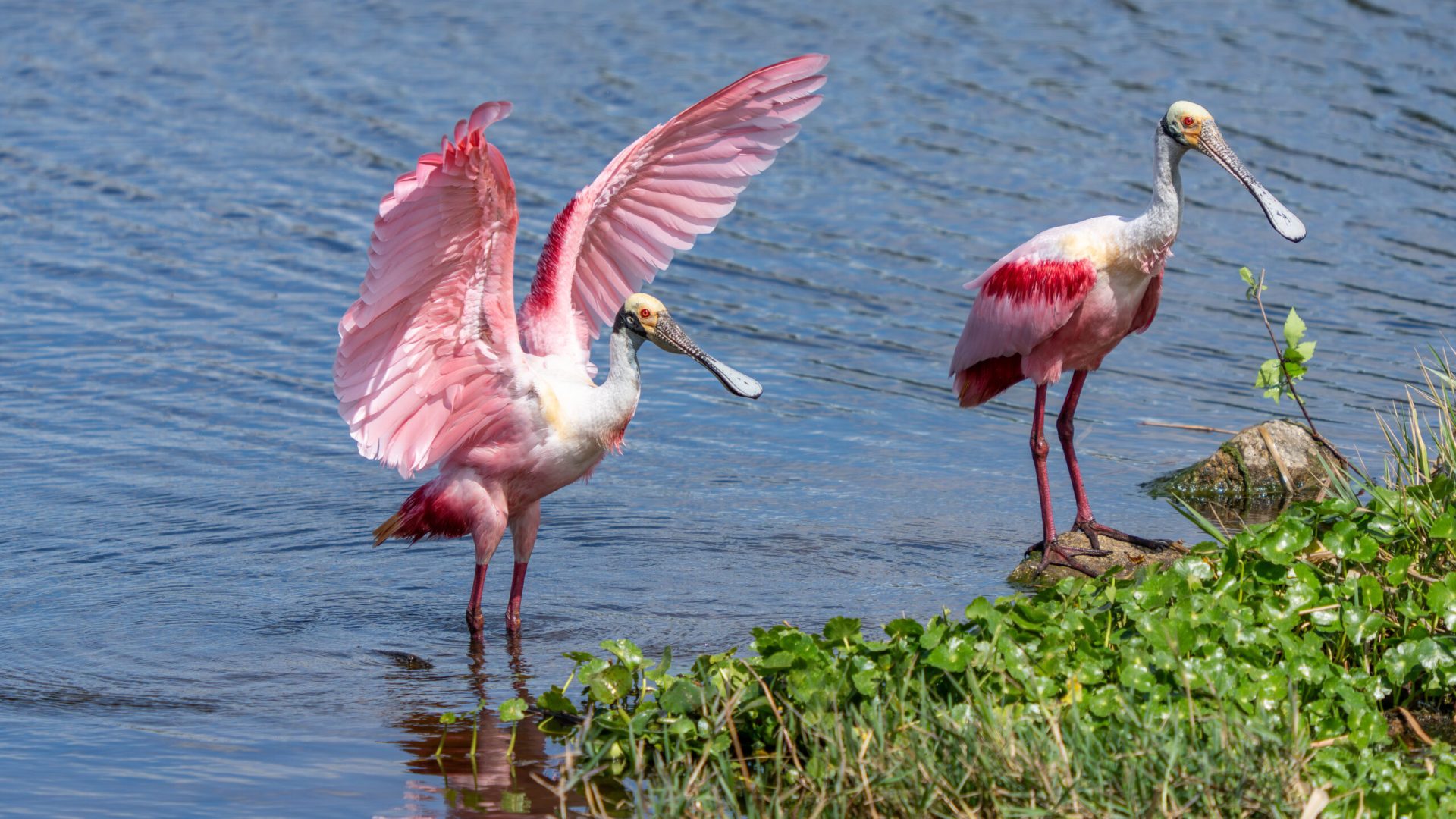
Each spring, these vibrant pink wading birds gather in the area’s shallow waters to forage and, in some cases, nest. Their arrival is closely tied to water conditions. Carefully managed water levels create expansive shallow marsh habitat; ideal feeding grounds where spoonbills can use their distinctive spoon-shaped bills to sweep side to side through the water in search of small fish, shrimp, and aquatic invertebrates. The bird’s signature rosy color comes from pigments found in the crustaceans it consumes, making healthy aquatic food sources essential not only for survival but for their brilliant appearance.
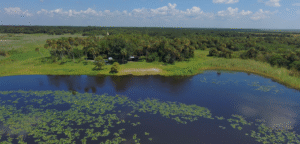
Visitors launching from the boat ramp often notice another remarkable behavior this time of year. Spoonbills frequently congregate within the small tree islands scattered across the marsh near the ramp, using these slightly elevated patches of vegetation as resting and roosting sites. From a distance, the islands can appear dusted in pink as dozens of birds perch together in the canopy. These tree islands provide protection from ground predators and rising water levels while offering a strategic vantage point close to productive feeding areas.
Because Central Florida’s seasonal changes are gradual, wildlife responds to the slight environmental cues such as daylight, rainfall patterns, and water depth. When conditions align, fish and invertebrate populations concentrate in shallow areas, drawing spoonbills and other wading birds in impressive numbers. Their presence is more than a beautiful spectacle for visitors and photographers; it is also an indicator of wetland health. Roseate spoonbills rely on consistent shallow-water depths, abundant prey, healthy vegetation, and good water quality. When they thrive, it signals that the ecosystem is functioning as intended.
The annual return of the roseate spoonbill to the area serves as a reminder that thoughtful water management supports not only community needs, but also the diverse wildlife that depends on these wetlands.