April is Water Conservation Month, a perfect time for water conservation professionals from across the region to come together in Daytona Beach for the latest Water Conservation Coordinators meeting hosted by the St. Johns River Water Management District.
Water conservation remains one of the most important and cost-effective solutions for meeting future water needs. That’s why each quarter, the District’s Water Conservation team brings together utilities, local governments and partners to share ideas, successes and challenges.
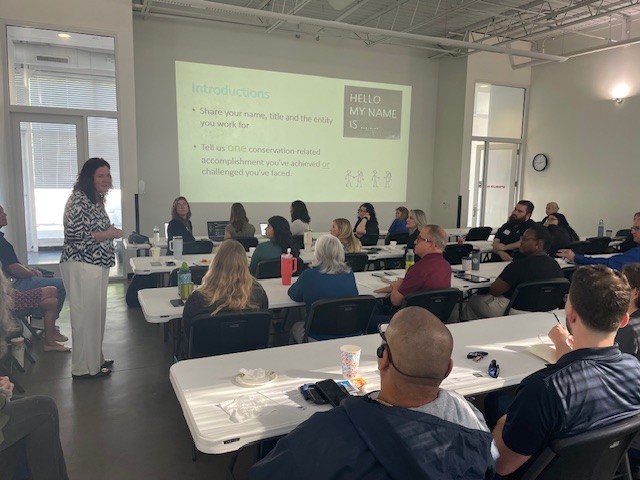
Water conservation professionals listen as Susan Pokorny of JEA highlights the utility’s free water conservation kits available to customers.
The meeting opened with long-standing tradition: attendees introducing themselves and sharing recent wins or obstacles. Among the highlights, Susan Pokorny with JEA shared details about the utility’s free water conservation kits for homeowners. Since 2023, JEA has shipped nearly 30,000 kits to customers, each designed to help households reduce water use and save money. Each kit features a variety of water-saving devices, including high-efficiency showerheads, toilet leak detection tablets, bathroom faucet aerators, a garden hose nozzle and a kitchen faucet aerator, along with simple guidance to help residents better understand and manage their water use. Pokorny noted that customers find the kits useful and provide straightforward ways to conserve water and lower utility bills. The program generated strong interest among the meeting attendees.
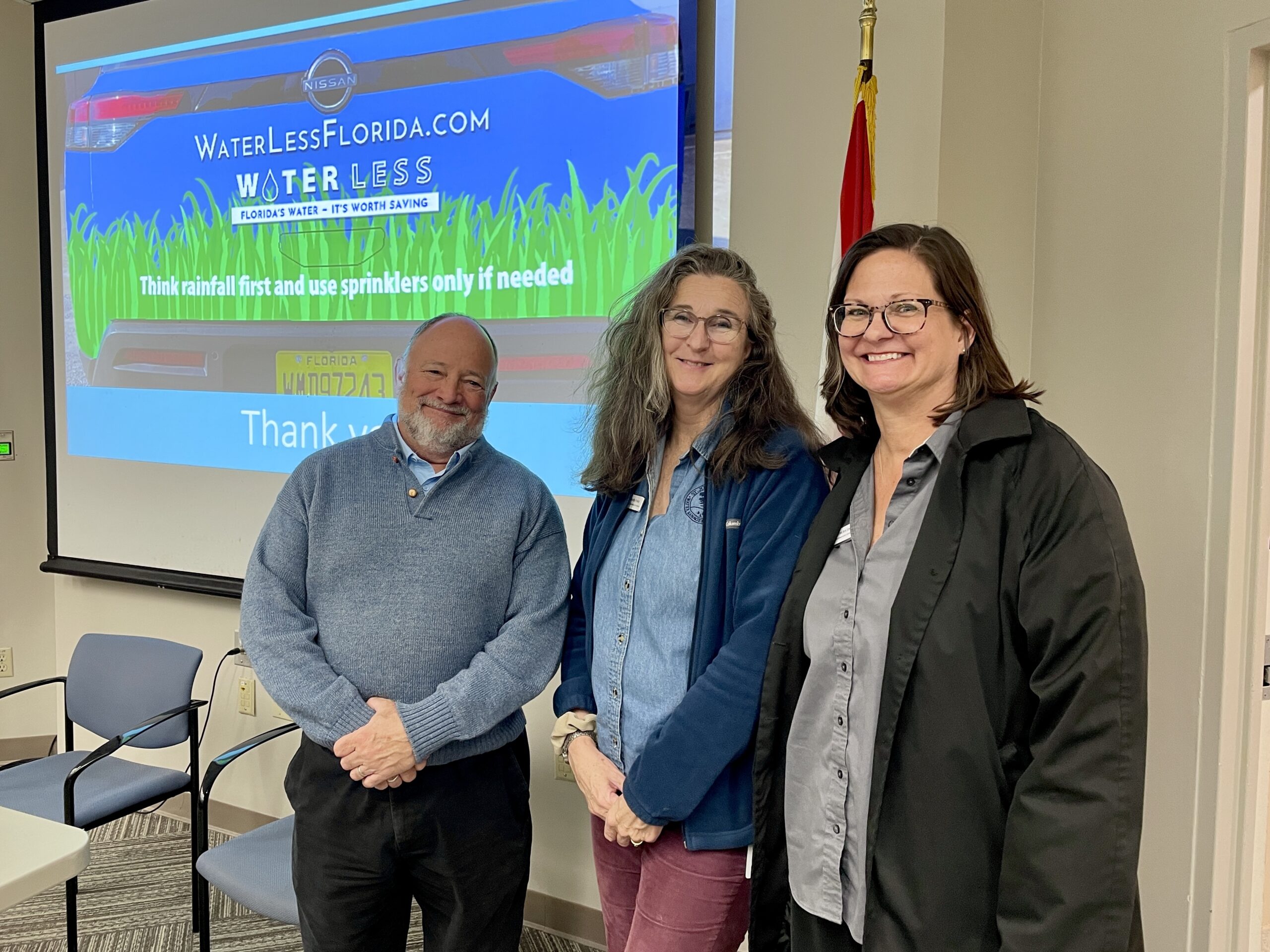
District Water Conservation Coordinators host quarterly meetings to strengthen and expand a collaborative network across the District.
“I find the Water Conservation Coordinators meeting extremely valuable. It’s a great space to share challenges and successes while building meaningful connections,” said Rachel Martella, the water conservation coordinator for Seminole County. “Here in Seminole County, we have many goals outlined in our 5-year plan that others have already worked through, so it’s incredibly helpful to hear what has been successful and gather tips along the way. We all share the same water resources—so it only makes sense to share ideas on how to conserve them as well.”
District staff also provided updates on regional water supply planning. Joy Kokjohn, the Central Springs East Coast (CSEC) regional water supply planning coordinator, walked attendees through how advanced modeling tools are used to estimate current and future water needs. These models play a key role in determining sustainable groundwater withdrawals and protecting long-tern water resources.
Attendees also received an in-depth demonstration of H2O SAV, an innovative mapping tool that helps utilities identify high water users. By pinpointing areas of excessive use, utilities can conduct targeted outreach and provide education where it’s needed most. The program now includes an irrigation evaluation manual, and extension agents are being trained to help homeowners improve irrigation efficiency.
James Lloyd, the City of Daytona Beach’s sustainability and resiliency officer, also delivered a presentation on the history of the city’s wastewater treatment system. Although new to the role and still in the early stages of program development, he expressed enthusiasm for expanding local water conservation efforts in the future.
That focus is especially important given that more than half of household water use goes to outdoor irrigation. In fact, a single run of a home irrigation system, on average, can use as much water as an eight-hour shower (approximately 991 gallons). Improving irrigation habits not only helps protect Florida’s aquifer but can also lead to meaningful savings on monthly water bills.
By creating space for collaboration and sharing real-world solutions, the quarterly meetings strengthen regional water conservation efforts and help ensure a more sustainable future for the communities and natural resources that depend on them.
For more information and tips on water conservation, please visit: www.sjrwmd.com/water-conservation