Each year, National Chemistry Week highlights the role chemistry plays in our everyday lives and the science that helps us better understand the world around us. At the St. Johns River Water Management District (District), chemistry is an important part of our work to protect Florida’s water resources and natural systems.
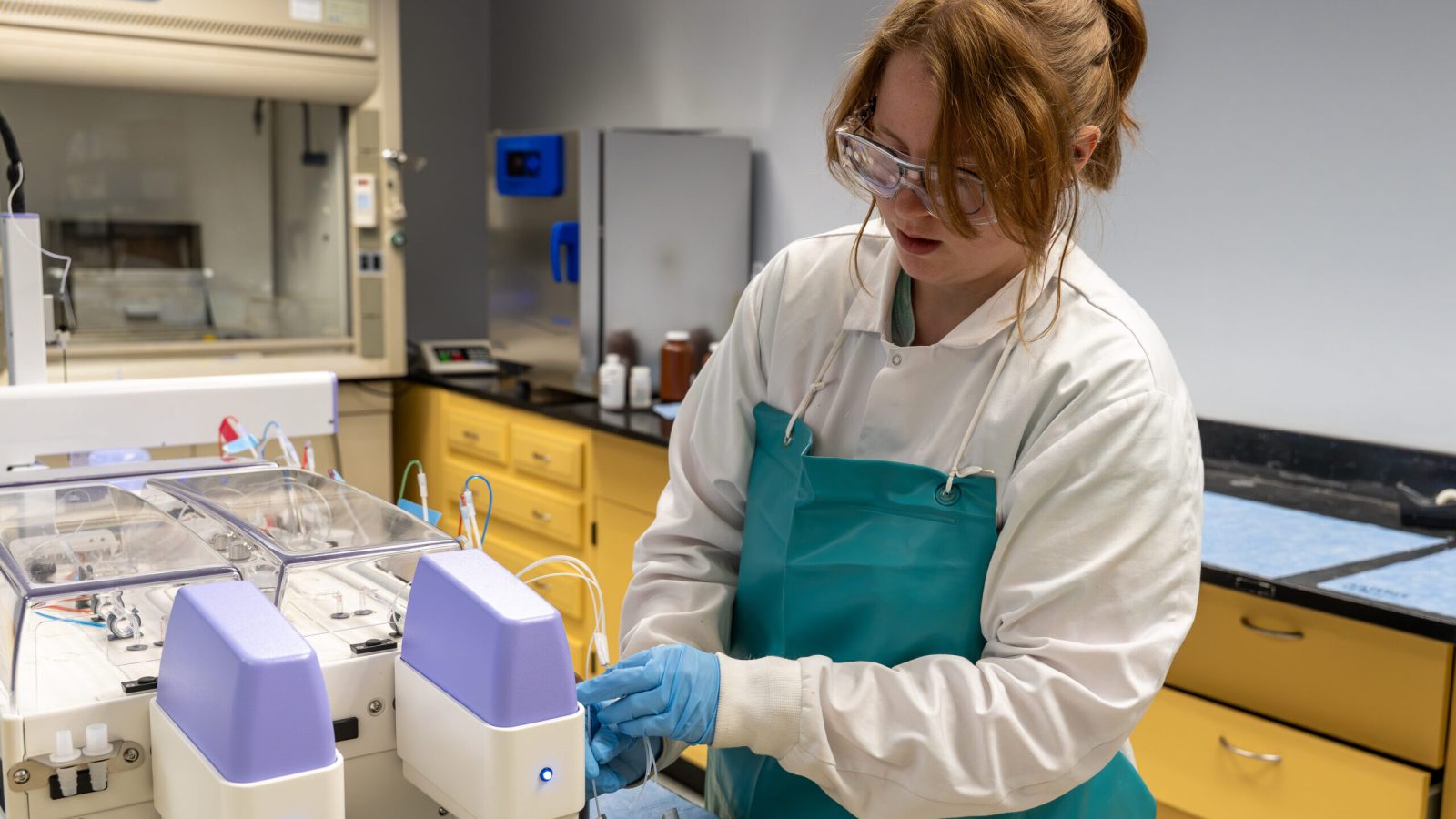
Behind the scenes, District laboratory scientists and technicians analyze thousands of water samples collected across our 18-county region. The District’s water quality monitoring network includes nearly 400 surface water sampling stations on rivers, streams, lakes, canals and estuaries, 23 spring stations and more than 450 groundwater stations.
Water quality samples are analyzed for nutrients, major irons and physical measurements using Standard Methods for the Examination of Water and Wastewater and U.S. Environmental Protection Agency (EPA) approved methods at District laboratories or through contracted laboratories. The resulting data helps District scientists, engineers and basin coordinators track water quality conditions and changes over time, evaluate restoration and conservation efforts and make science-based water management decisions.
National Chemistry Week is an opportunity to recognize the people behind that science. Every sample requires precision, technical expertise and careful attention to detail to ensure the data our teams rely on is accurate, defensible and reliable.
From a single water sample to thousands of data points collected across the District, chemistry provides valuable insight into Florida’s water systems and the work needed to protect them.
This National Chemistry Week, we recognize our laboratory scientists and technicians for the important role they play in supporting the District’s mission. Through chemistry, their work turns water samples into reliable data that helps guide everyday decisions to protect Florida’s water resources. From understanding changing conditions to supporting restoration efforts, the science behind every sample helps us better protect our water today and for the future.