Water conservation is a way of life for Floridians and one of the best places to start is right outside your front door. In Florida, where landscapes grow year-round and weather can quickly shift from dry spells to heavy rain, everyday choices in the yard can make a difference. The St. Johns River Water Management District encourages you to water wisely to help protect water supplies while keeping landscapes healthy and attractive.
Know you watering day(s)
Start by making sure you’re watering on the right day. Watering restrictions vary by season and location, and you can find the schedule for your address here. Be sure to check and follow the requirements for your area.
And remember: more water isn’t always better. Overwatering can weaken turf, encourage shallow roots, increase the risk of disease and wash fertilizers or yard debris toward storm drains.
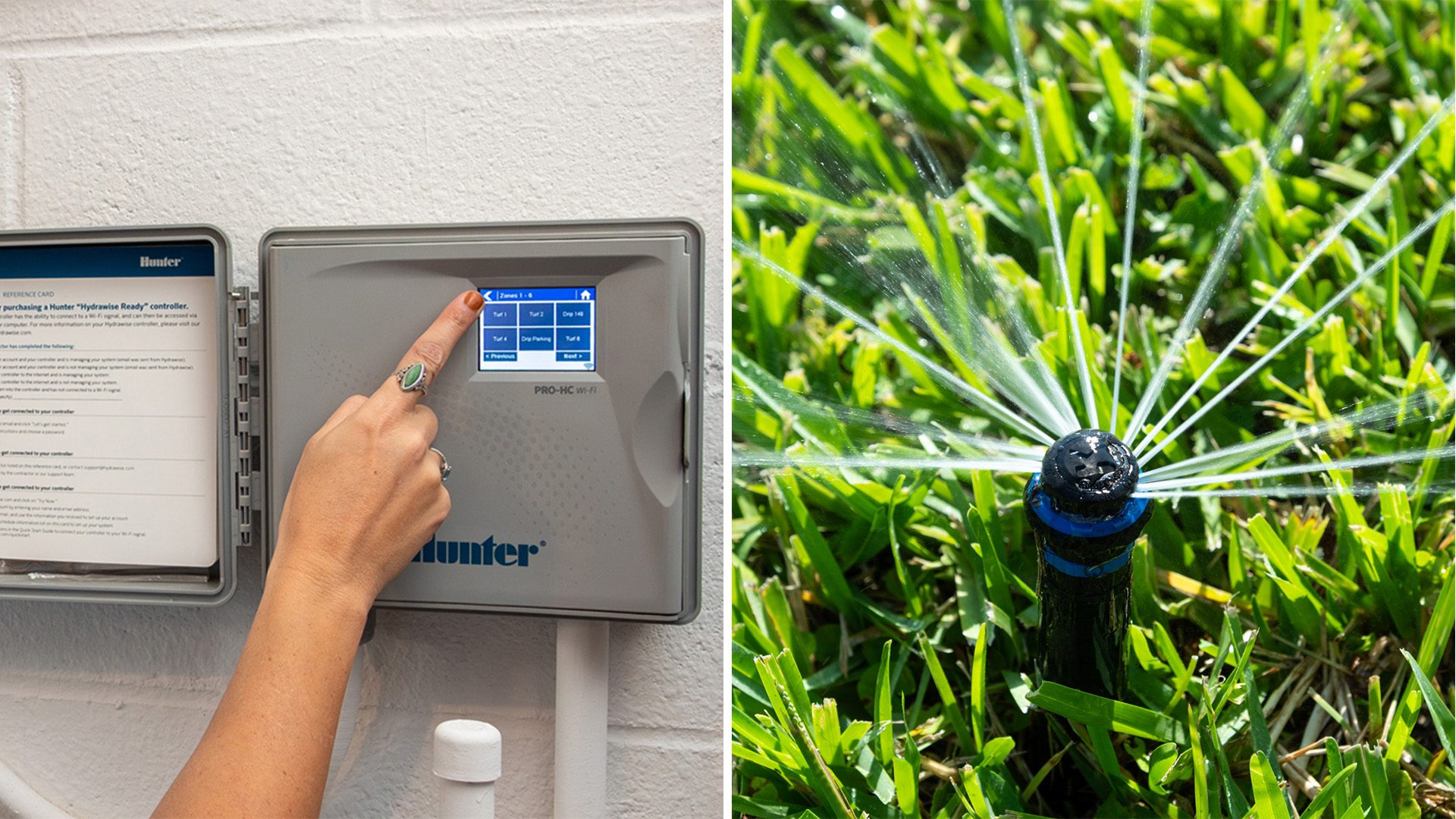
Instead of using the automatic feature on your irrigation controller, leave it in the off mode and look for signs that your yard actually needs water. Turfgrass that needs water may show folded leaf blades, footprints that remain visible after walking across the lawn or a slightly blue-green color. Check out our irrigation tips and videos at www.sjrwmd.com/water-conservation/savingwater/outdoors.
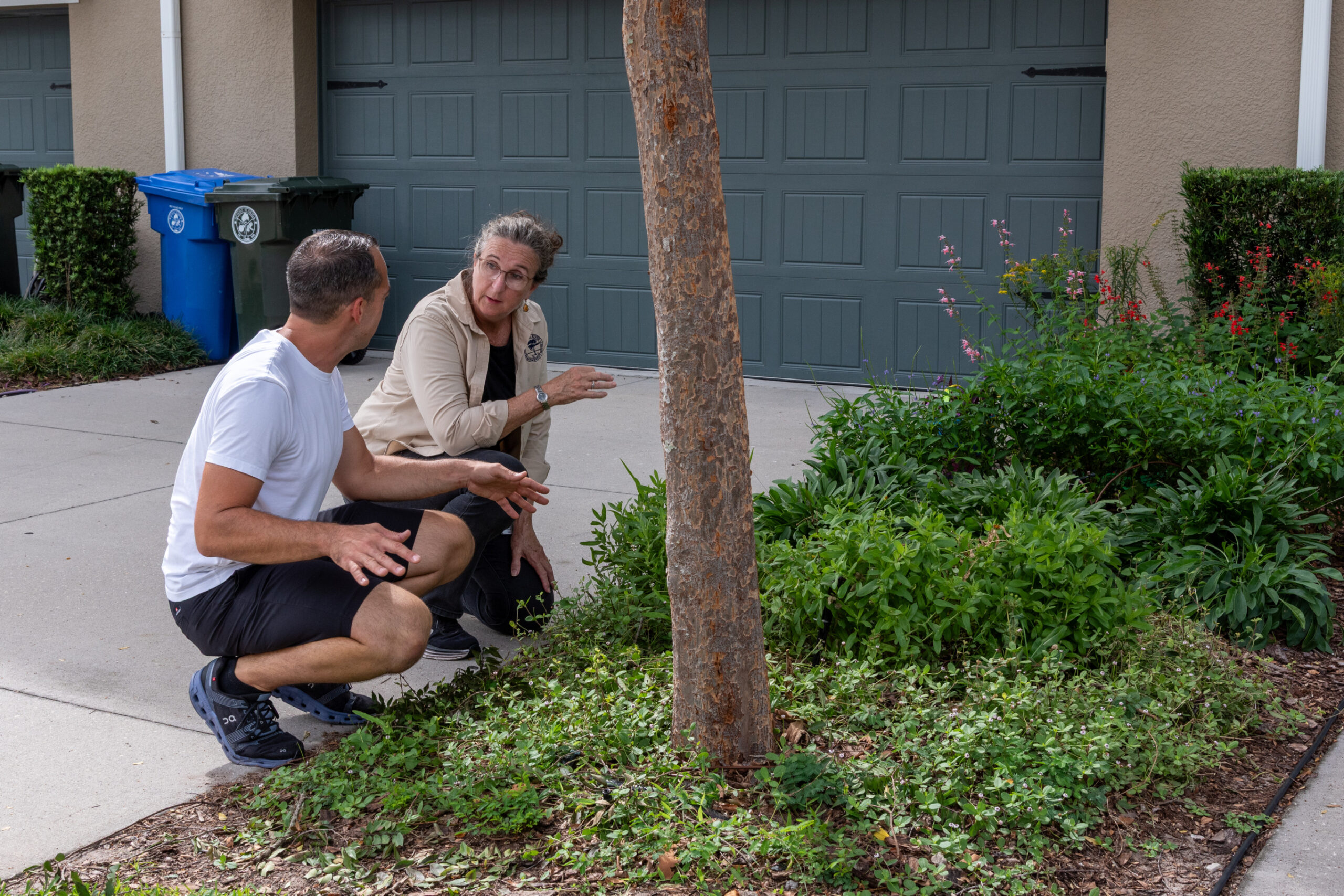
Deirdre Irwin with H2O Hero Keegan Ford discussing his water conserving work
Water the landscape, not the sidewalk
An efficient irrigation system puts the right amount of water in the right place. Sprinkler heads should water turf and plant beds, not driveways, sidewalks, roads or buildings.
Spray heads and rotor heads should be placed in separate zones because they apply water at different rates. Shrubs, trees and planted beds should also be irrigated separately from turf grass. For these landscape areas, drip or microirrigation is often a more efficient choice because it delivers water slowly and directly to the root zone.
Take a few minutes to watch your irrigation system while it runs several times a year. A simple adjustment to a sprinkler head can keep water where it belongs and prevent unnecessary waste.
Let rain sensors do their job
Florida’s summer showers can do some of the watering for you, as long as your irrigation system knows when to stay off. A working rain sensor is required on all automatic irrigation systems in Florida. These devices help prevent irrigation systems from running during or after rainfall, but they only save water when they are installed correctly and working properly. A sensor blocked by vegetation, tucked under an eave or damaged may not stop the system when it should.
After a soaking rain, check whether your sprinklers still run while the yard is wet. If they do, the sensor may need to be adjusted, cleaned, repaired or replaced.
Fix leaks before they become water waste
Like so many part of your home, the irrigation system needs to be maintained to function efficiently. A broken sprinkler head, stuck valve, cracked pipe or leaking drip line can waste water quickly and sometimes the problem is easy to miss. Watch for soggy spots, dry patches, unusually high-water bills, water spraying into the street, bubbling near sprinkler heads or zones that keep running after shutoff.
At least once a season, walk your yard while the system is running. Catching small problems early can save water and prevent bigger repairs later.
Choose plants that fit the place
A water-efficient landscape starts with putting the right plant in the right place. Plants suited to local soil, sunlight, mature size and rainfall patterns typically require less supplemental irrigation once established. Learn more about Florida-Friendly Landscaping at https://ffl.ifas.ufl.edu/
Hydrozoning, which is grouping plants with similar water needs together, can also make irrigation more efficient. Instead of mixing plants that need frequent watering with drought-tolerant varieties in the same irrigation zone, hydrozoning allows each area to receive only the water it needs.
Make conservation a yard-by-yard habit
Water conservation doesn’t have to mean completely changing your landscape. It starts with simple habits: checking the irrigation timer, watching for leaks, keeping rain sensors working, choosing plants wisely and letting rainfall count.
One yard may seem small, but those everyday choices add up, helping protect Florida’s water resources.