“We’re really excited to welcome the consortium attendees along with t he general public to the wetlands and share the work that we are doing to protect the natural resources of east-central Florida,” says City of Orlando Wetlands Manager Mark Sees. “When we get down to it, really our nature in Florida is what brings everybody here. And we really feel the Orlando Wetlands is a great way to showcase that effort.”
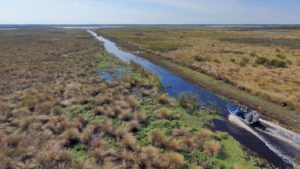
Spanning multiple counties (Indian River, Brevard, and parts of Okeechobee, Osceola, Orange, Seminole and Volusia) in east-central Florida, the basin provides flood protection, improves water quality, supports wildlife habitat and boosts local economies. Its wetlands filter pollutants, shelter threatened species and attract thousands of visitors each year. Yet the system faces persistent challenges like nutrient pollution, invasive species, and ecological uncertainties, reinforcing the need for strong, coordinated management.
To strengthen that coordination, St. Johns River Water Management District Environmental Scientists Kim Ponzio and Dean Dobberfuhl proposed bringing together the people who work on the basin every day, leading to the inaugural consortium in 2015. This year’s event continued that mission at the Orlando Wetlands’ newly opened visitor center, hosting nearly 70 participants in person and another 30 online.
Throughout the day, presenters shared insights on topics ranging from deep learning models for wetland analysis to ecological wonders across the system to new research on Snail Kite populations. Across every session, the message was consistent: protecting the Upper St. Johns River Basin requires partnership, shared learning and a unified vision for the future.
“We have people who have been attending the consortium for over a decade, like me, and then we have people who are new on the scene,” says Ponzio. “They bring a new perspective. It’s really good to see that kind of collaboration together; coming up with projects that the District can’t do on our own, but we can do it together with partnering agencies.”
Want to explore the Upper Basin for yourself? Visit one of our District lands:
To learn more about the District’s commitment to the protection and conservation of the Upper St. Johns River Basin, please visit www.sjrwmd.com/waterways/st-johns-river/upper.